

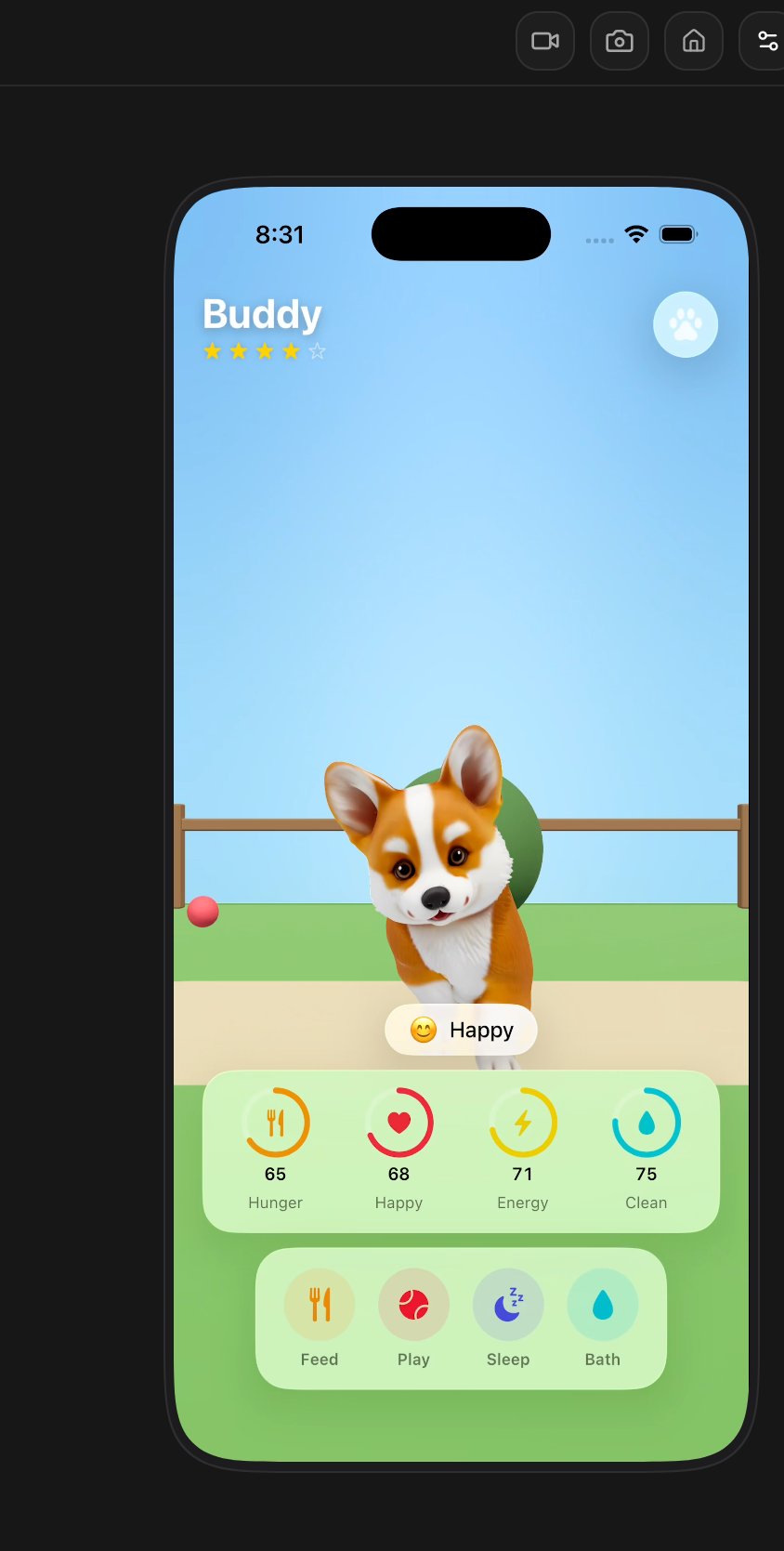
A 3D pet game running in the iPhone simulator inside Rork. The dog is a generated model, animated and lit in the scene.
Start a game
The prompt box on rork.com has two shortcuts for games.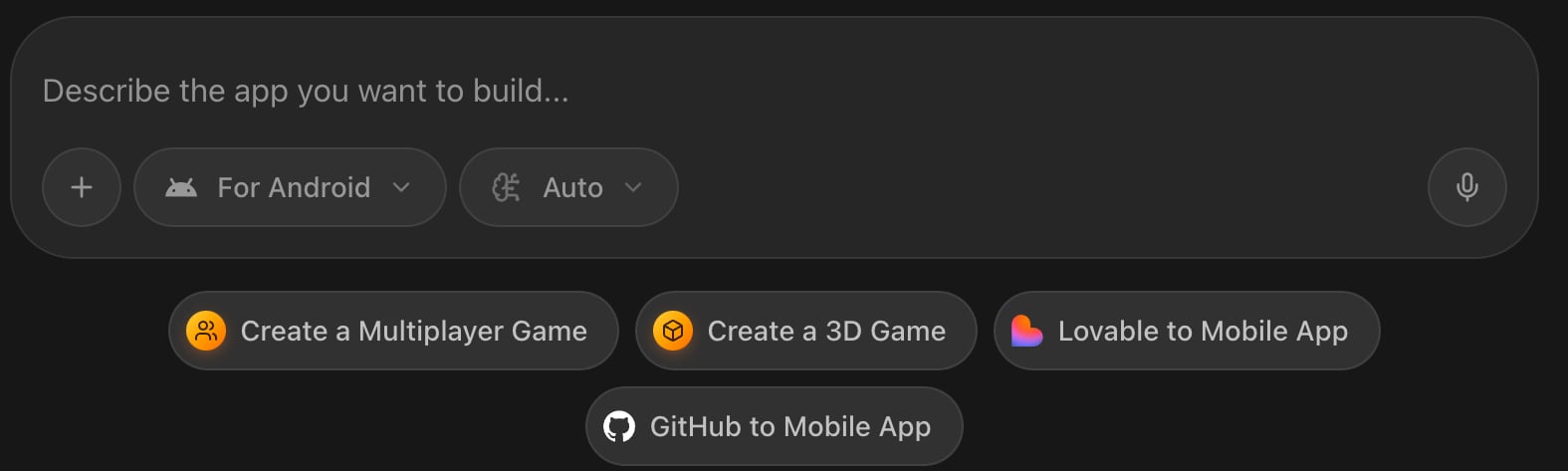
The two game shortcuts under the prompt box. Both fill in a prompt and switch the project to web.
- Create a 3D Game fills in
Create a 3D game with realistic physics about... - Create a Multiplayer Game fills in
Create a multiplayer game about...
Pick web or native
The same idea takes a different shape depending on where it runs. Decide this before you build, because it changes the engine, the distribution, and the plan you need.
Start in the browser to find out whether the game is fun. Move to native when it is, and when you want the App Store, Game Center, or the frame rate. See Plans & Subscriptions and the Rork Games page.
Android games are not a documented path today. Build for the browser or for iPhone, and remember a browser game already runs on an Android phone.
Fill the world with generated assets
This is the part that usually stops people making a game alone. Rork generates the pieces in the chat, and puts them into the scene:- 3D models. Ask for a prop, a vehicle, or a character. Characters come out rigged, so they can be animated.
- Animations. Walk, idle, jump, each as its own clip.
- Sprites and 2D art for canvas and SpriteKit games.
- Music and sound effects, and voices for characters.
3D generation works on every plan. See Images, video, audio, and 3D models and Build credits vs Cloud credits.
Iterate by showing, not describing
Games are visual, and words are slow. The fastest loop is: look at it, screenshot what is wrong, send the picture.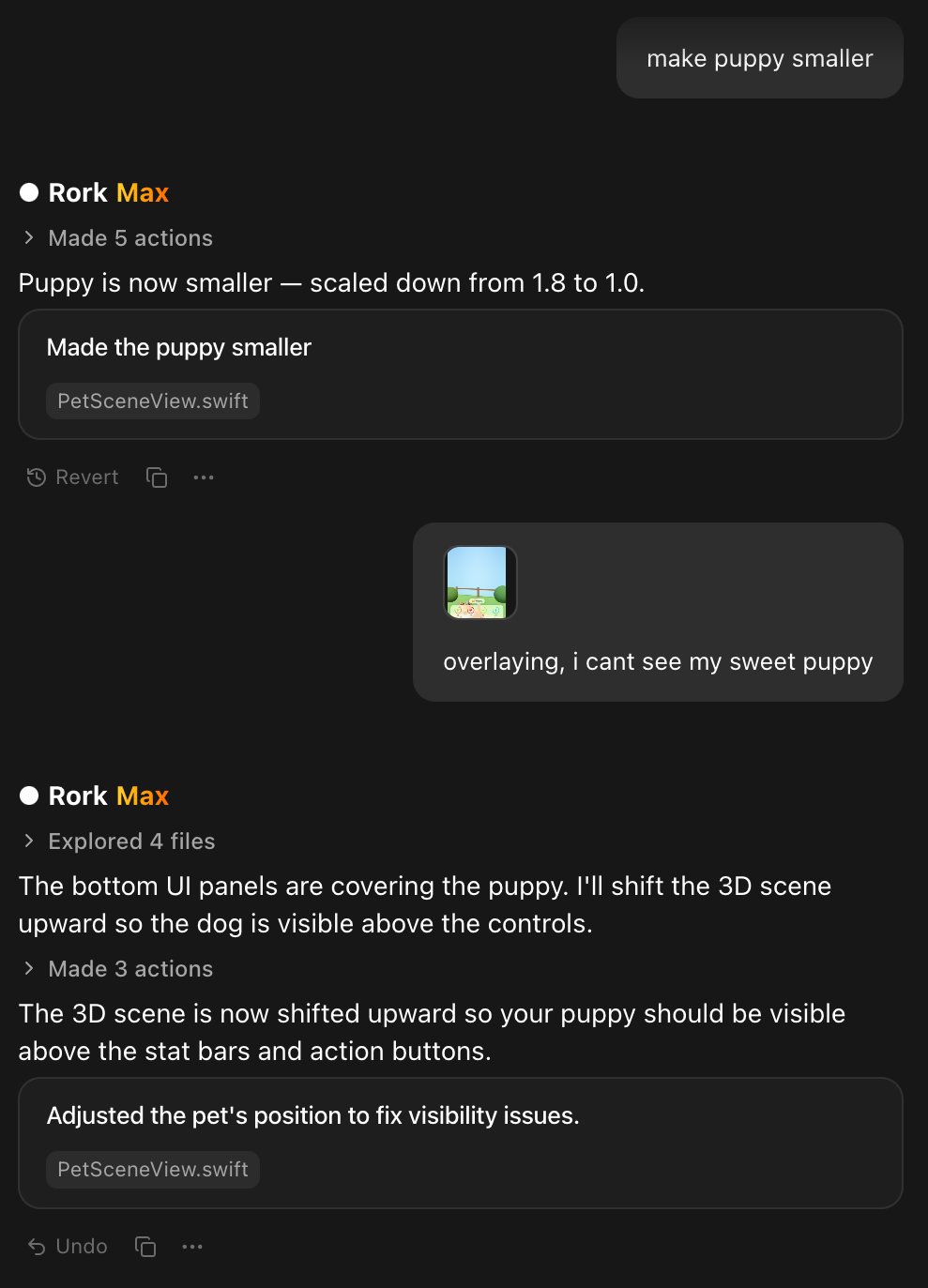
Two rounds of iteration: a size change in words, then a screenshot when the UI covered the character.
Play it while you build
A browser game runs in the preview next to the chat, so you play it as you go. An iPhone game needs a simulator, and the simulator costs credits while it runs.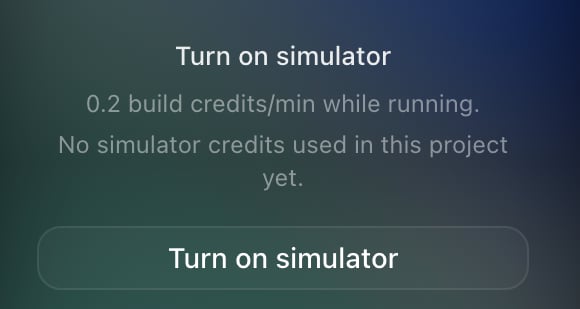
The simulator charges by the minute, and tells you so before you start it.
Multiplayer, honestly
Rork has no multiplayer product that you switch on. It writes the multiplayer code into your game, and how hard that is depends on the kind you want. Straightforward: turn-based play, two players on one device, and rooms with a code. Harder: real-time online play. It needs matchmaking, state syncing between players, and rules for what happens when somebody’s connection drops. Rork’s own FAQ says it plainly: expect a few rounds of iteration. How it is built:- In the browser, Rork writes a small server with Cloudflare Workers and Durable Objects, and the players talk to it over WebSockets.
- On iPhone, Rork uses Game Center, which brings real-time and turn-based matches, sign-in, leaderboards, and achievements for free.
- Voice chat is separate from the game state, and Rork hosts the servers that make it work.
What to expect
Generated games are real games, not tech demos, but they have a ceiling. Keep scenes in the range Rork targets: roughly a thousand moving things, a few hundred thousand triangles, textures that fit comfortably in memory. Ask for a low poly model when a detailed one is not needed, since it costs less and runs faster. Some things are not what Rork does:- No Unity or Unreal, and no importing a project from them.
- Leaderboards come from Game Center on iPhone. A browser game needs a backend, which Rork can build with Rork Cloud.
- Selling things in the game goes through the normal in-app purchase route. See How to add a paywall with RevenueCat.
Ship it
A browser game publishes like any web app: press Publish, and share the address. See Rork Web. An iPhone game goes to the App Store like any other app. Games get read carefully in review, so run the AI App Store Reviewer first, and be careful with anything that looks like gambling, loot boxes, or a copied character. See Publish your app.FAQ
Do I need Rork Max to make a game?
Do I need Rork Max to make a game?
For a native iPhone game, yes. Max is the plan that lists “Games with native performance”. Browser games work on any paid plan, and 3D generation works on every plan.
Can I import my Unity or Unreal project?
Can I import my Unity or Unreal project?
No. Rork writes games with SpriteKit, RealityKit, and three.js, so an engine project cannot be brought across.
Can I use my own 3D models?
Can I use my own 3D models?
Yes. Drop them into the chat and say where they go. Generated and uploaded models sit together in the Assets tab.
Does the simulator cost credits?
Does the simulator cost credits?
Yes, 0.2 build credits per minute while it runs. The panel says so before you start it, and stopping it stops the charge.
Can two people build the same game?
Can two people build the same game?
Yes, invite them as editors, though only one message runs at a time. See Share a project and work together.
My game runs slowly. What now?
My game runs slowly. What now?
Say what is slow and where. Common fixes are fewer objects on screen, low poly models, and smaller textures. The logs in More → Code show what the game prints while it runs. See Read the code and read the logs.
Next steps
Generate models and sound
How the 3D, audio, and image tools work.
iPhone, Android, or web
Pick the platform before you build.
Play it on your phone
Install the game on a real device.
Rork Games
The product page, with examples of what Rork builds.