

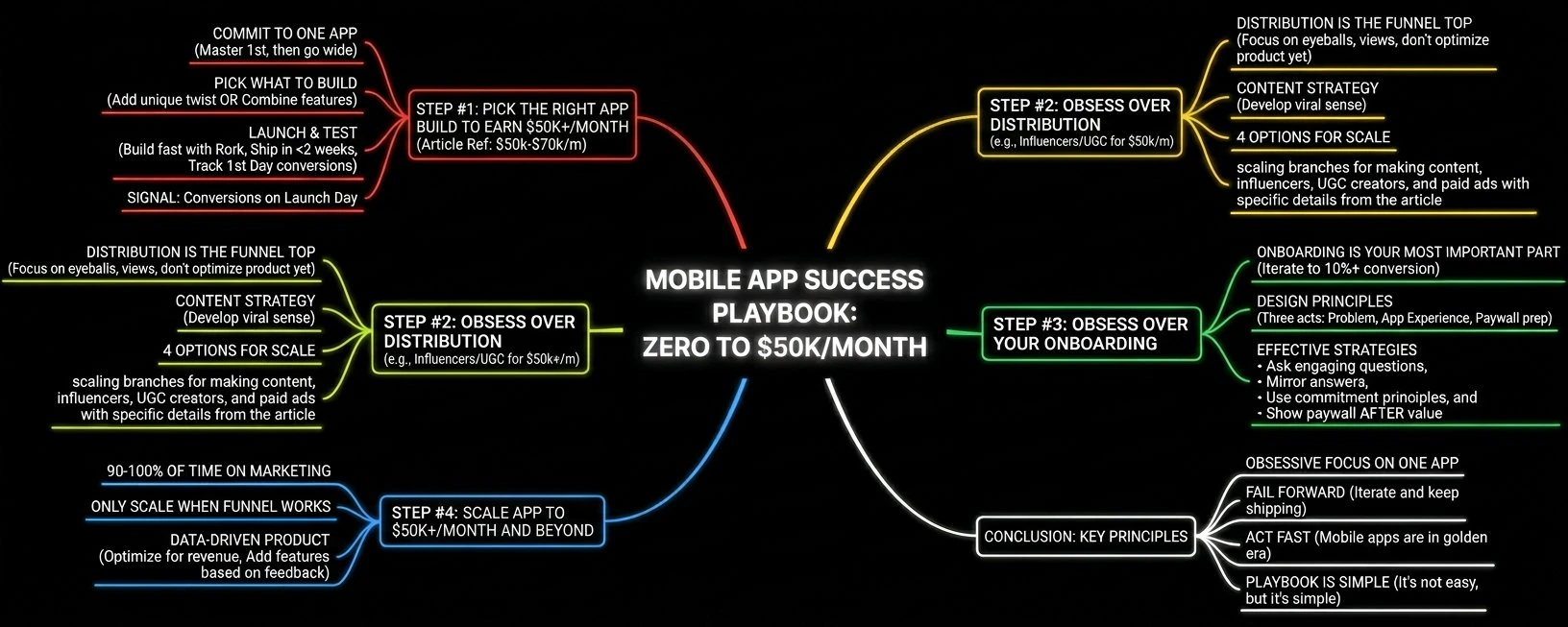
Step #1: Pick the Right App
You can build as many apps as you want. The trick is knowing which one to commit to. Every successful builder has one thing in common: they cracked the code on a single app first. Once they had a system that worked, they replicated it across as many apps as they wanted. You might see top builders shipping multiple apps right now. That’s only because they already learned how to make one work. The distribution patterns, the onboarding instincts, the conversion math: they figured it out on app #1. That’s where you want to be focused. Your first scaled app teaches you everything you need to know to scale the next one. Distribution is where most builders stall. So pick one app, commit to it long enough to crack distribution, then go wide. So how do you actually pick the right app to build? You can do one of two things.- Grab a successful app and add your own twist to it. Plain copycatting won’t get you anywhere. Add your own personality, your own colors, a mascot, whatever makes the app yours. Two apps serving the same core need can have completely different design philosophies and not look at all like each other.
- The other thing you can do is grab two successful apps and combine their main features into one. Think productivity app + faith. Think fitness tracker + screen time blocker. Think journaling + gamification. This is actually harder to do, so if you’re just starting out we’d recommend adding your twist to a successful app instead.
Build whatever app you want in just a couple of prompts
Step #2: Obsess Over Distribution
Apps are a funnel.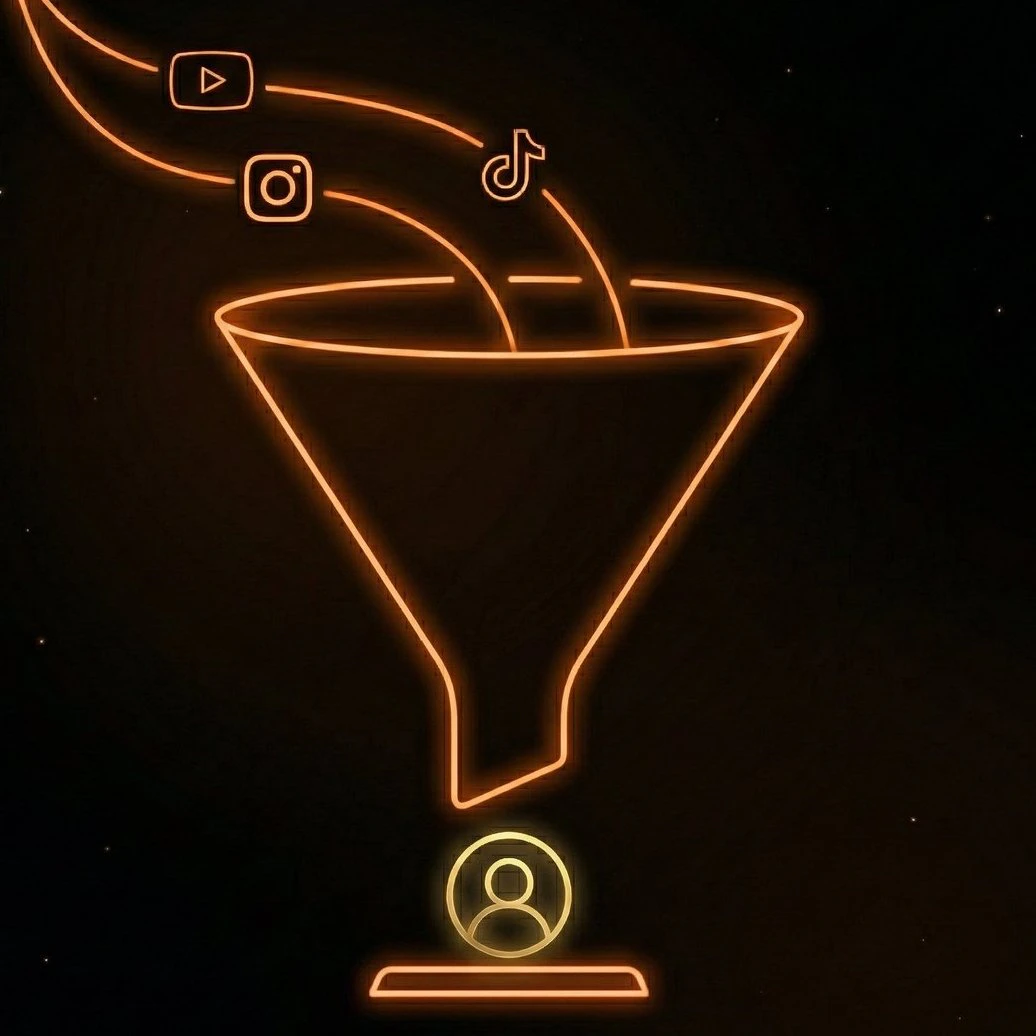
“But if my app isn’t optimized I might not convert as well on the few downloads I do have.”It doesn’t matter. There is nothing to optimize for or change with 100 downloads. We’d even argue this is the case with 5k downloads. So don’t touch your app at all until your distribution engine is running decently well (we’ll get to that). You have 4 options:
- Make content yourself
- Hire influencers
- Hire UGC creators
- Paid ads
Making Content Yourself
The best way to go if you’re new to distribution, even if you have money to invest. Making content yourself develops your viral sense and gives you the foundations to know what to look for when you want to hire influencers and UGC creators. Start posting at least 21 times a day across TikTok, Instagram, and YouTube Shorts. It’s not as much as it sounds. You only have to make 7 posts a day and cross-post them to the different platforms. Now the question is what content to actually make. It depends on the niche. Look at the content your competition is making and copy it directly. Use the same hooks, the same script, even the same CTA if you can. The type of content you make depends on your niche, but here are some formats you can try right now.UGC Reaction + Demo
This format alone has gotten apps to $10k+/month on its own. Buy reaction clips from friends or from UGC creator marketplaces, and stitch your demo to it. The hook, which is the combination of the clip and the text you use on top of it, needs to be really good. Make sure the demo you’re using is not longer than 8 seconds.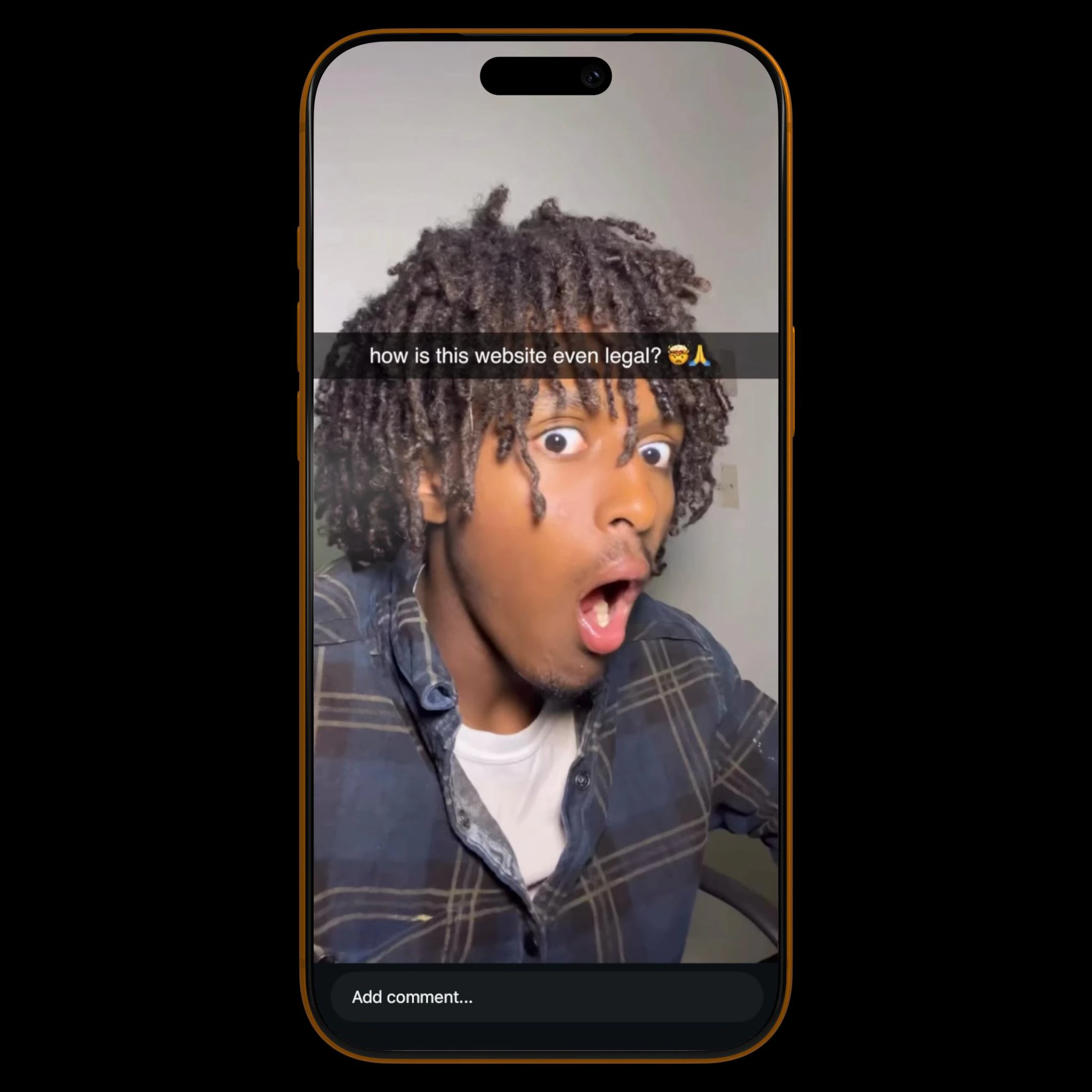
Slideshows
Another strong format. There are apps making $20k+/month just from slideshows (and they perform great as ads as well). Make sure your posts aren’t Pinterest feeds with a bunch of random aesthetic pictures and no cohesion. Make your slideshow accounts consistent. Take direct inspiration from your competition and include a direct CTA to download your app. Build a brand identity around your slideshows. A good slideshow account has a brand identity and is consistent. A bad one is all over the place, with no clear format and no clear brand identity.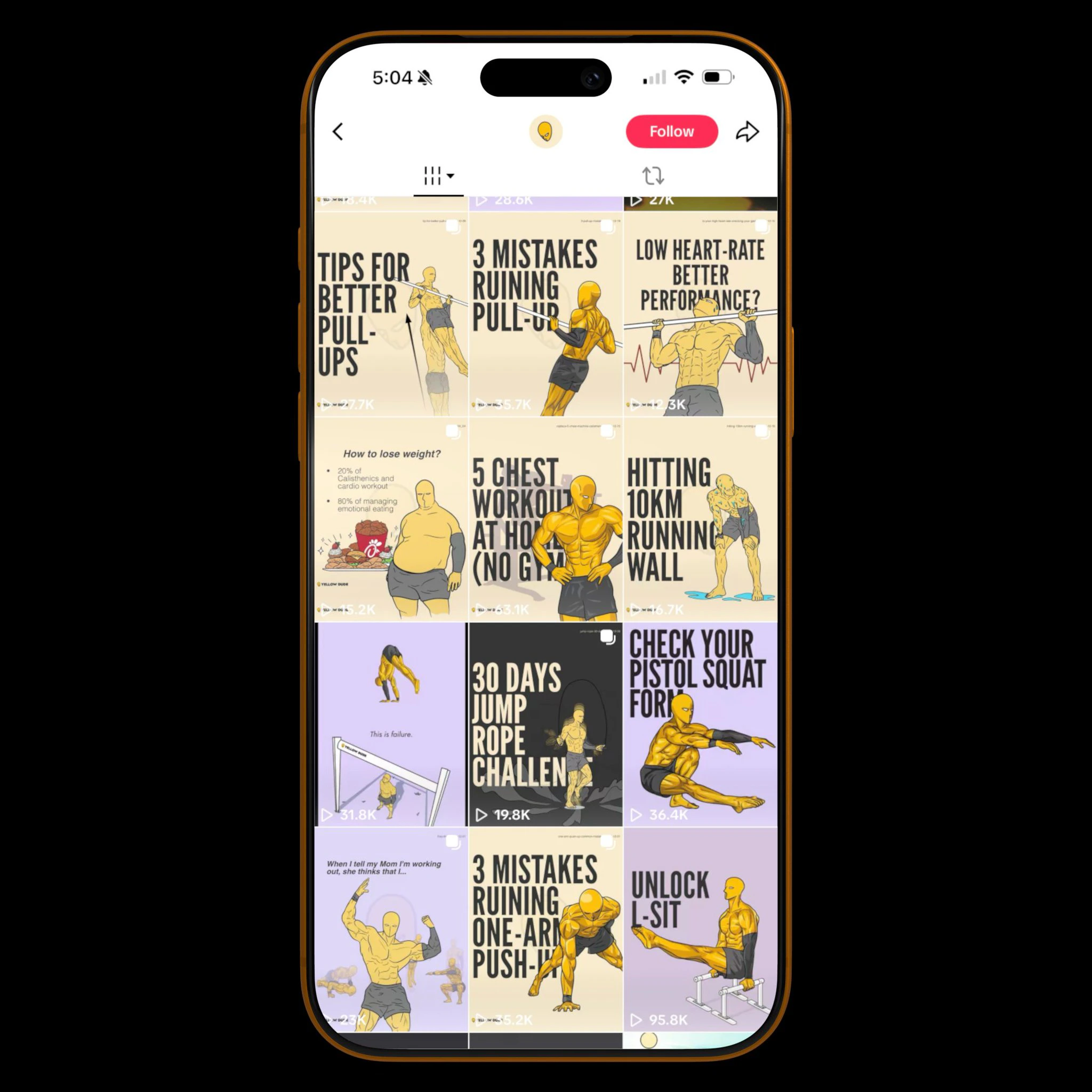
Memes
These work really well on Instagram. Wouldn’t be the first format to try, but it can be great for brand awareness, especially when coupled with a Manychat automation and Instagram Stories that drive your followers to download your app.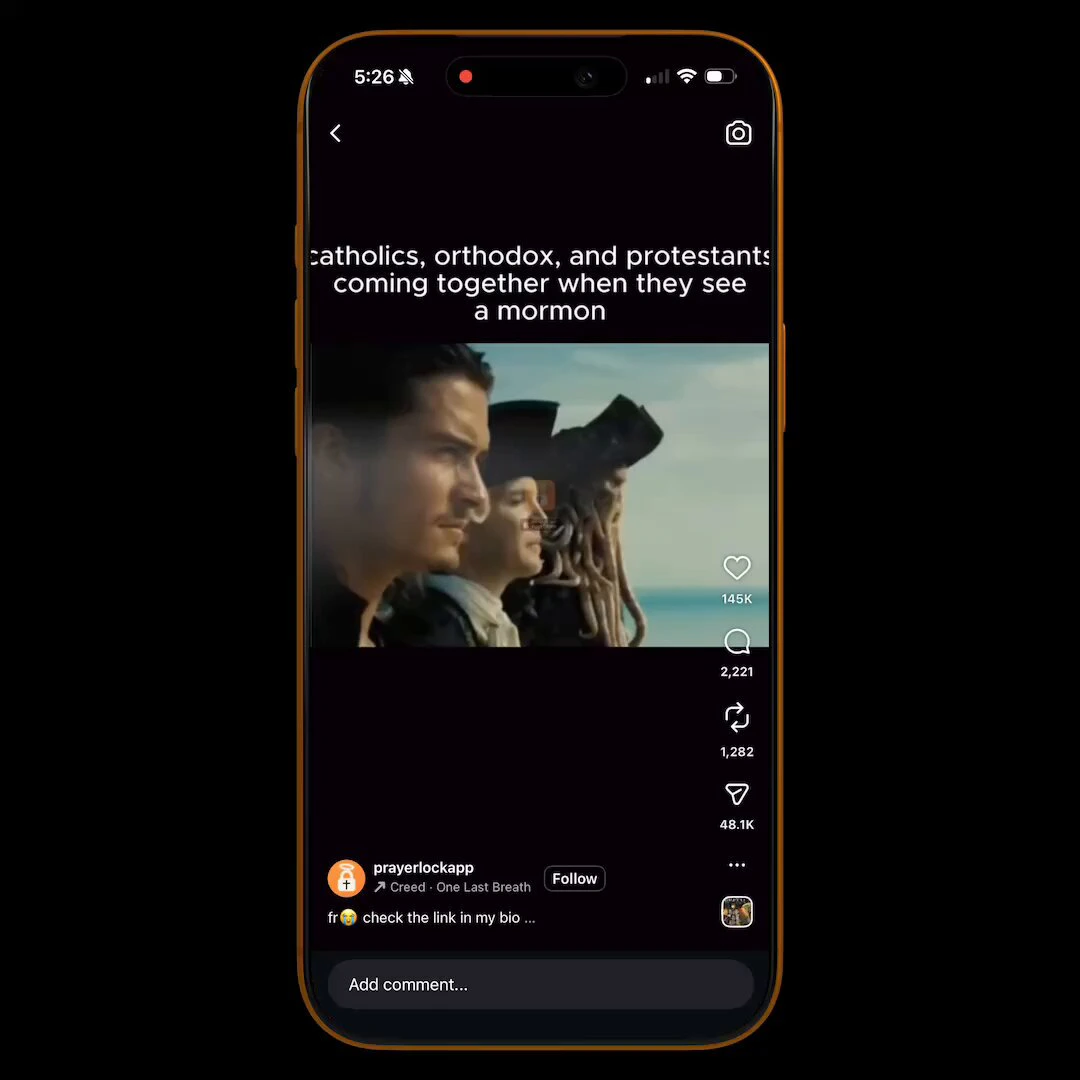
Influencers
Influencers are a great way to scale your app. A lot of apps hitting $25k+/month scaled this way. Running influencers correctly is harder and requires investment. You need a budget of at least $10k to pull it off, because a lot of them won’t work. The first step is mass DMing them. Send at least 100 DMs a day. Most won’t respond. Make sure your message starts with “Paid Promo Opportunity” or something similar to cut through the noise. Make your message short and concise. You can’t just reach out to any influencer. They need to actually be in your niche or speaking to your customers. They need good engagement rates. Look at the comment section. Are most of the replies fire emojis? Do people actually care about this creator? The best influencers have an audience that deeply cares about them. Look for that. Never disclose the deal through DMs. You’ll give them a chance to think it through and get a worse deal for you. Instead, get them on a call as soon as possible. If you can’t, send the deal through text to their phone number. You should be looking for a deal as close to $1 CPM (cost per thousand views) as possible. A clean structure: start them on a “trial” deal at 1.2 CPM deal after that.UGC Creators
Widely considered the best way to scale mobile apps right now. You hire micro influencers or new creators to make new accounts that produce content just for your app. Having a successful UGC army is significantly harder. You have to make sure creators make the right content for your brand, check in on them constantly, track their performance, hire new creators, fire them fast, pay them. It’s a complex process. For this reason we wouldn’t recommend new builders try to build a UGC army unless you already have experience with distribution or a co-founder. A UGC campaign will take most of your time and is a full-time job on its own. That said, if you can make it work, you’ll have an edge most builders don’t, and a skill that compounds for the rest of your life. UGC campaigns are the highest-leverage distribution channel in mobile, and the hardest to get right. The first step is similar to influencers: mass reach out. But you’re looking for slightly different things. With influencers you mostly want to reach out on Instagram and email. With UGC creators you mainly want to reach out through TikTok or UGC marketplaces. Followers don’t matter at all. Instead, look for creators with 2–3 viral videos, camera charisma, and strong communication skills. UGC campaigns are more about taste and viral sense than anything else. That’s what makes them so interesting and so hard at the same time.Paid Ads
Apps have gone from 25k/month with this distribution strategy. Most people completely overlook ads. They either start them too late or too early. We left this distribution channel for last on purpose, because you shouldn’t be starting out with paid ads. Ads do best when you already have organic content that worked for you before. That content could come from your own posts, your influencers, or your UGC creators. Make sure you already have a content system in place before you jump to ads. You don’t need much. Only 5 high quality pieces of content a week to start testing. By high quality we don’t mean highly produced or edited. We just mean content that’s already working organically. Don’t make super vague posts that convert through the comment section. Your ads need to be “Organic Ads”: posts that have a genuinely organic hook and make the user feel like this is an actual organic video, but with a clear and direct CTA. Paid ads are the only distribution channel on this list you should not start before you truly nail your onboarding. You need at least a 10% download-to-trial conversion rate to run them successfully. Which takes us to the next step in scaling your app to $25k/month. Once you have a content engine running and you’ve partly solved the top of your funnel (meaning you’re getting at least 300 daily downloads), you now need to go back to the product. You’re not going to add new features. You’re not going to optimize retention. You’re going to completely obsess over your onboarding.Step #3: Obsess Over Your Onboarding
Your onboarding is without a doubt the most important part of your app. If you’re reading this and still haven’t shipped, try to get this right the first time around. Don’t wait. The only reason we mention it as the third step is to push you to get your hands dirty with marketing as soon as possible. Here’s everything that matters when designing your onboarding. Follow these and you will get a strong conversion rate.- Think of your onboarding as a story with three acts: an introduction that paints the problem, a climax where the user experiences your app, and a conclusion that prepares them for the paywall.
- Don’t design your onboarding from scratch. Study the best onboardings in your niche and outside it, find what works, and make it your own.
- You need at least one aha moment, a screen that stops the user in their tracks and makes them feel the weight of their problem. It should hit within the first minute.
- Most founders use onboarding questions to learn about their users. The real purpose is the opposite. You want the user to reflect on their own answers and slowly convince themselves they have a problem worth solving.
- After every few questions, mirror the user’s answers back to them so they feel like the experience is being built specifically for them.
- The longer your onboarding, the better it converts, as long as every screen is adding value. People hate losing something they already invested in, so after 10 to 15 minutes in your onboarding, they’ll think twice before leaving at the paywall.
- Let the user actually use your core feature during the onboarding. Don’t just describe what the app does. Make them do it.
- Show your review modal right after the user completes your core feature, when they are at their most excited. This is the most important thing you can do for your ASO and social proof. Most users will not pay, but they can still leave a review, and that review compounds over time, bringing you more organic downloads for free.